Back
The Future of Accounting: Technology, Skills, and the Human Role Through the Lens of Recruitment
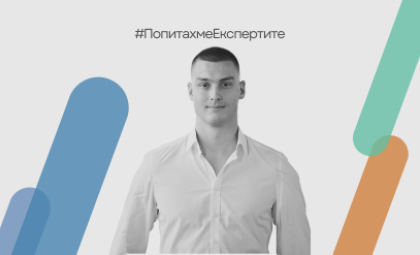
In today’s dynamic labour market and the changing expectations toward finance and administrative professionals, companies are increasingly seeking specialists who combine technical expertise, adaptability, and business thinking. For “In Our Focus”, Valentina Hristova, a Senior Consultant with 6 years of experience in recruitment across various business sectors, shares her observations on the trends shaping accounting, finance, administrative, and commercial roles, as well as how employer expectations toward these professionals are changing.
Valentina’s interest in human psychology and behavior began at an early age and later intertwined with her passion for accounting, logic, and accuracy. She graduated from an economics high school with a qualification in accounting, later pursued studies in psychology, and completed a master’s degree in the legal field. Today, this unique combination of knowledge and interests helps her understand both the needs of businesses and the motivation, potential, and professional development of candidates within the finance and accounting sector.
Where does your motivation and confidence to work in recruitment and business solutions come from?
Throughout my career, I have developed in various roles – sales call agent, customer service specialist, accountant, regional coordinator for training groups, and trainer in soft skills programs. Some of these programs included “Time Planning and Organisation,” “Transition from Unemployment to Employment,” and “Career Orientation and Building a Future Career Vision.” This diverse experience helps me better understand the specifics of the roles I support businesses in hiring for.
Wherever I have worked, I have always tried to understand my colleagues. I have often searched for answers to questions such as what motivates people to perform at their best, how the most successful team members stand out, why some individuals struggle to adapt, how teamwork is built, and how interpersonal relationships develop. These are questions I still explore with the same enthusiasm today.
How is the role of the accountant changing in the context of automation and the adoption of new technologies and AI solutions?
With the adoption of AI, companies now have the opportunity to optimise their accounting operations to an unprecedented extent. At the same time, there is a growing need for professionals focused on verifying and controlling incoming data. To navigate the endless flow of information, accountants must possess strong theoretical, practical, logical, and legal accounting knowledge.
They need to stay informed about updates in accounting legislation, applicable standards, and tax regulations, including VAT and corporate taxation laws, as well as regulations specific to each accounting segment, whether related to leasing transactions, VAT, fixed and movable assets, or closing activities.
The purely operational and mechanical processing of large volumes of documents, currently handled by part of the accounting workforce, will gradually shift toward targeted, precise, logical, and rational verification of large databases pre-generated by systems.
What are the most in-demand skills for accounting professionals today – technical or strategic?
This is an interesting question because the answer goes beyond technical and strategic skills alone. I observe that the most sought-after competencies are increasingly personal qualities and soft skills.
Companies are definitely looking for strong organisational abilities, emotional intelligence, the capability to handle stressful and uncertain situations, creativity and broad thinking when seeking solutions, adaptability within teams, and the ability to build stable interpersonal relationships. Practice shows that technical and strategic skills can be developed to their fullest potential when built on this foundation.
Psychological and interpersonal skills remain timeless, unlike technical and strategic competencies, which evolve continuously.
What distinguishes a successful accounting candidate in today’s dynamic business environment?
From my experience in recruiting finance and accounting professionals, the profile of a successful candidate is often very clear. These are individuals with strong psychological resilience, capable of handling different cases and challenges, adapting to colleagues and teams, maintaining a positive attitude toward processes and optimisation ideas, demonstrating loyalty to the company, and showing a continuous desire for learning and professional growth.
It is also important for them to feel inspired by the profession itself and to perceive it as an engaging and meaningful challenge.
What trends do you expect to shape the labor market for accounting roles over the next 1–2 years?
As technology adoption accelerates, more companies will optimise their accounting processes and implement AI-driven solutions. Operational and repetitive accounting activities will increasingly be replaced by system algorithms. As a result, many traditional SSC-type roles will evolve to include more controlling functions, error detection, database verification, process optimisation modeling, system training, and analytical responsibilities.
If the traditional accounting model has so far followed the sequence of input–verification–reporting, with the integration of AI it is shifting toward analysis–control–risk management.
The accounting profession will increasingly overlap with analytics and controlling functions because technological development requires it. Educational institutions will also need to significantly rethink their programs and introduce additional disciplines aligned with the emerging trends in the accounting field.